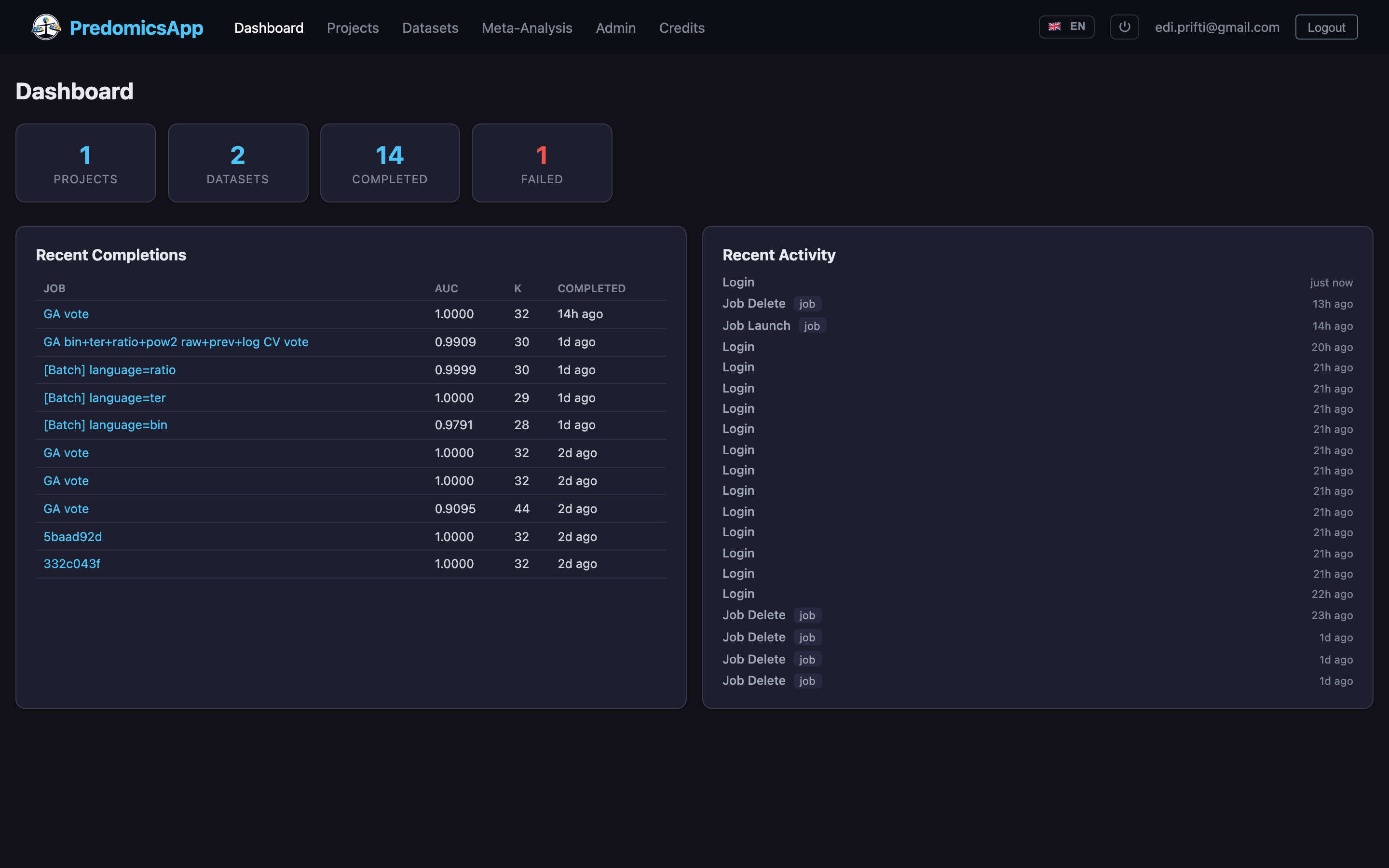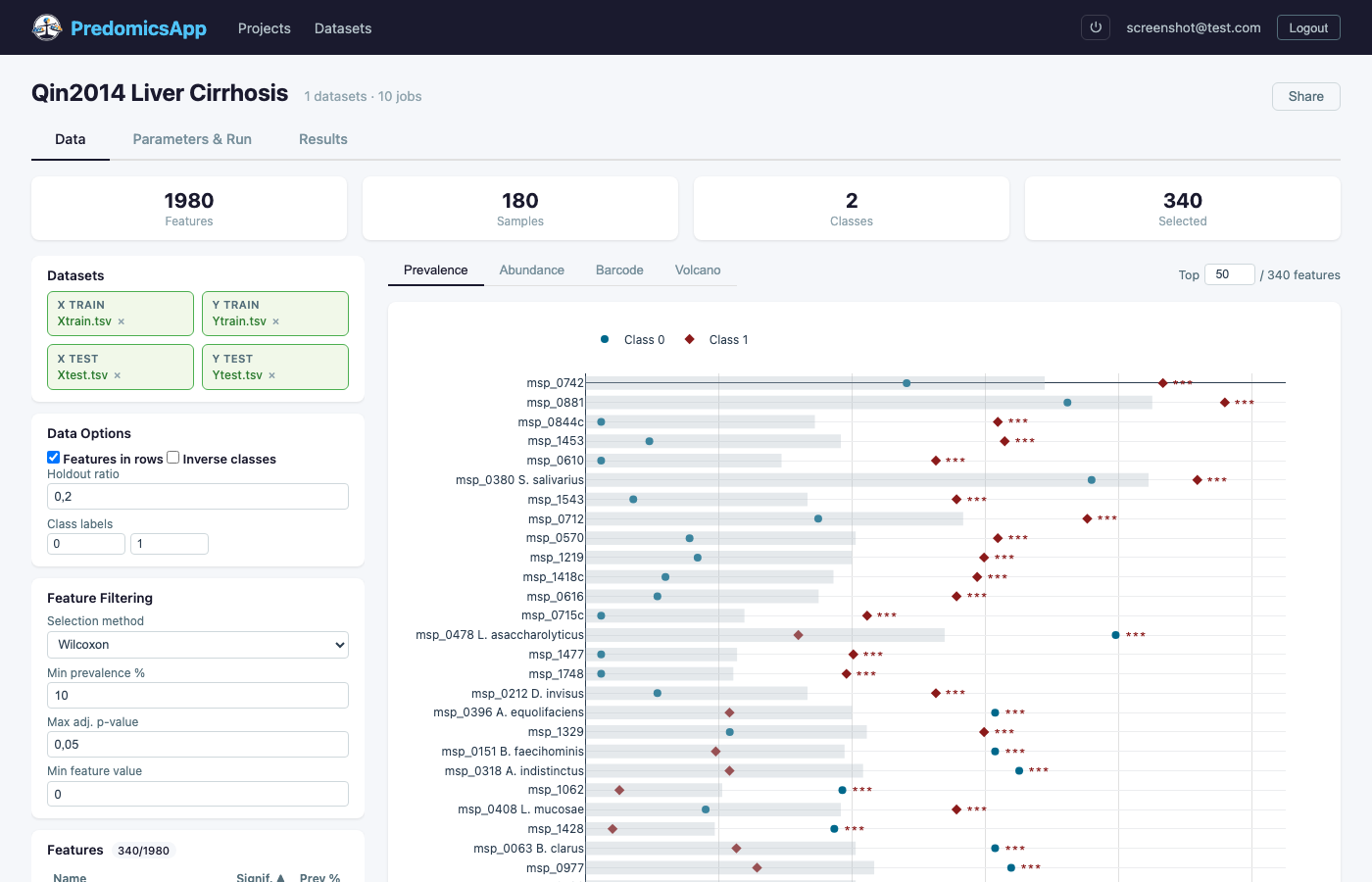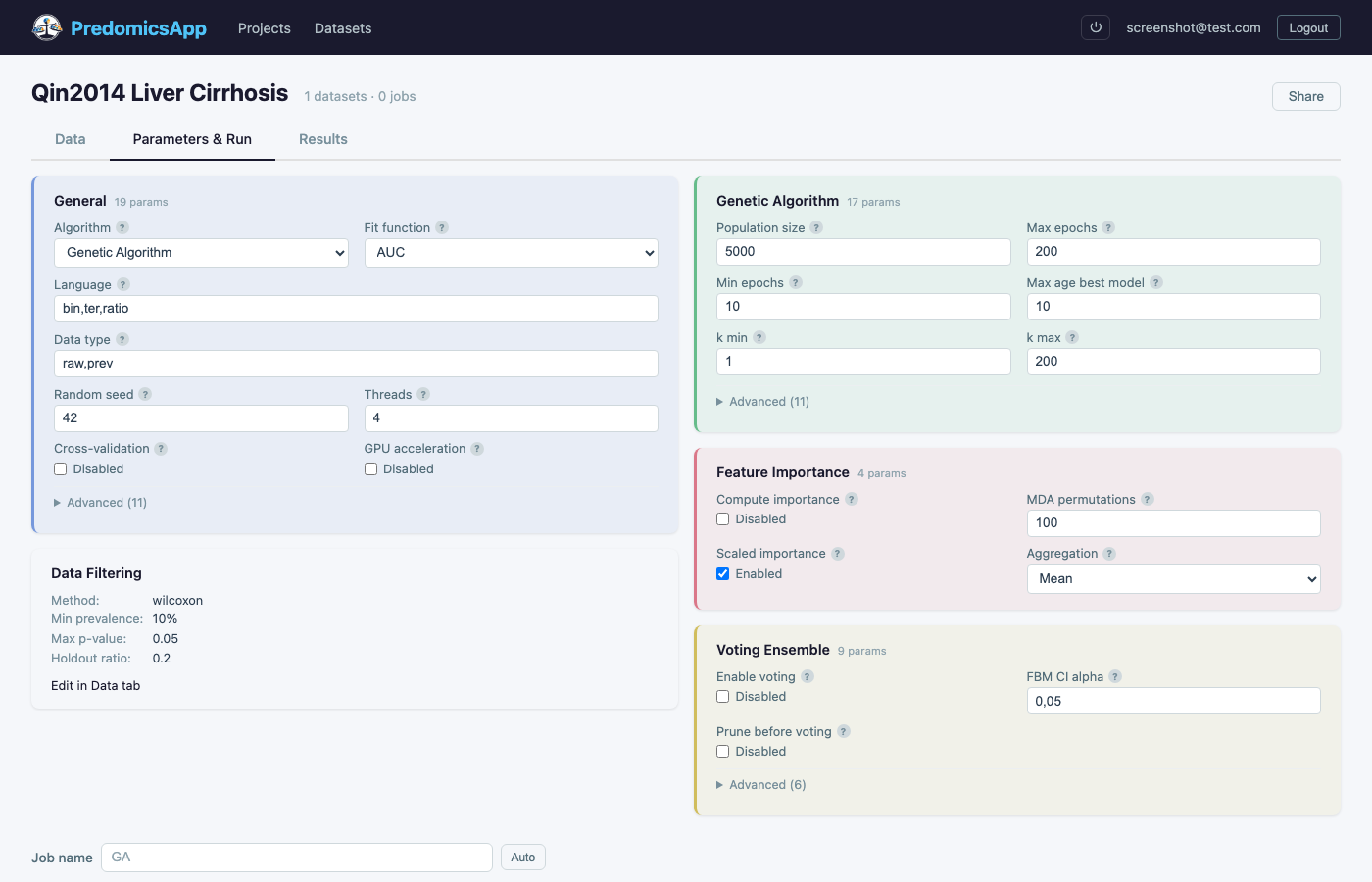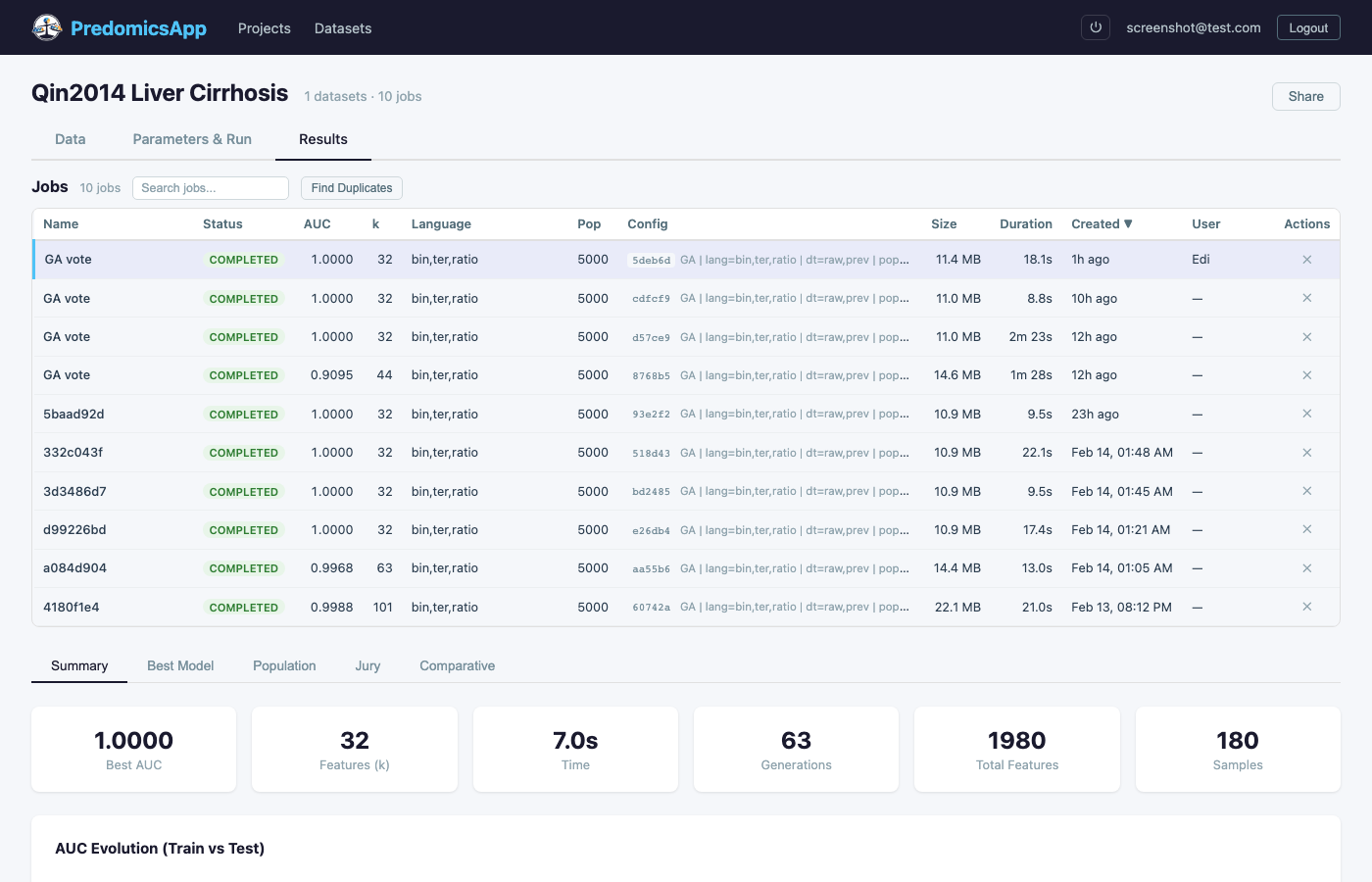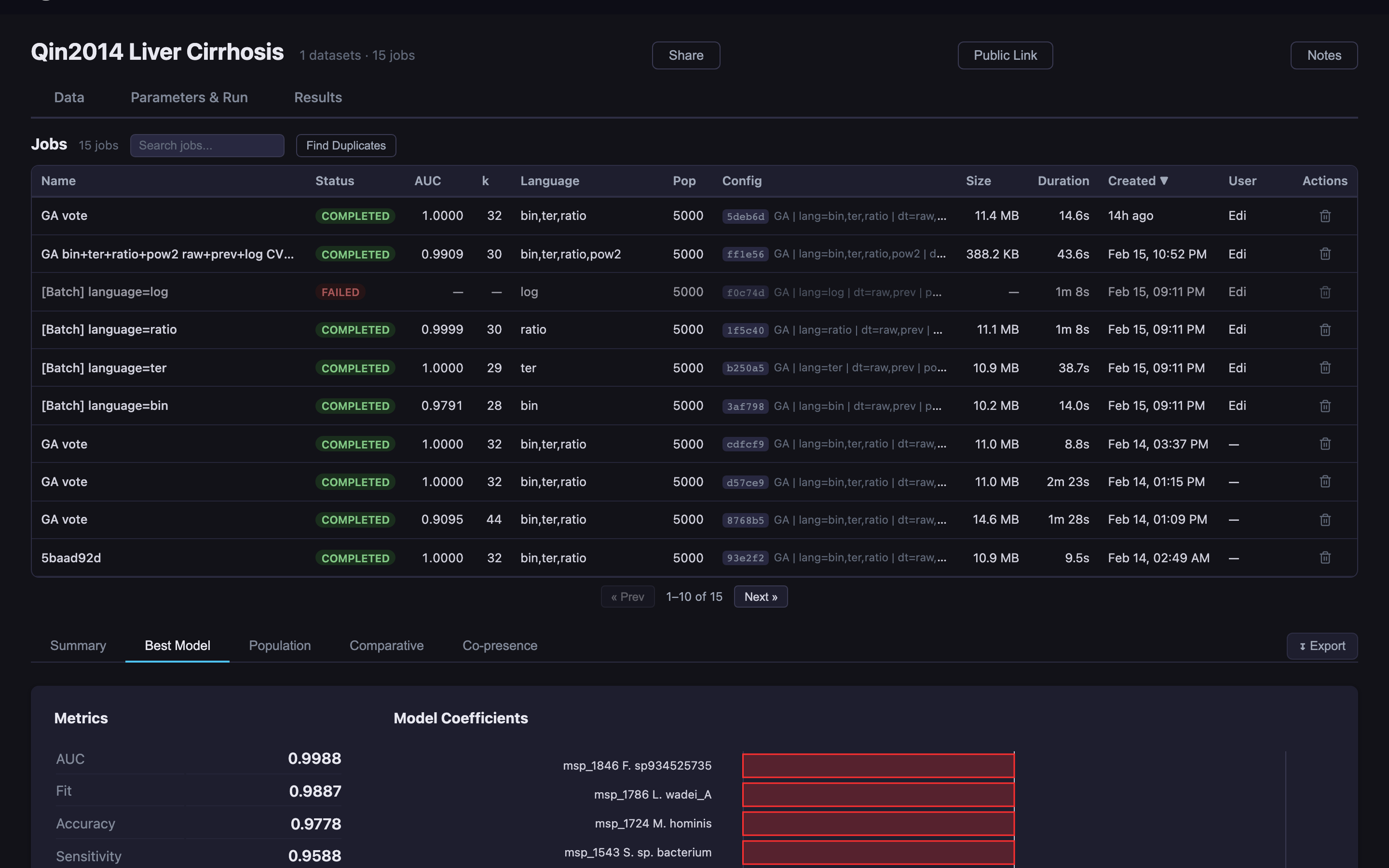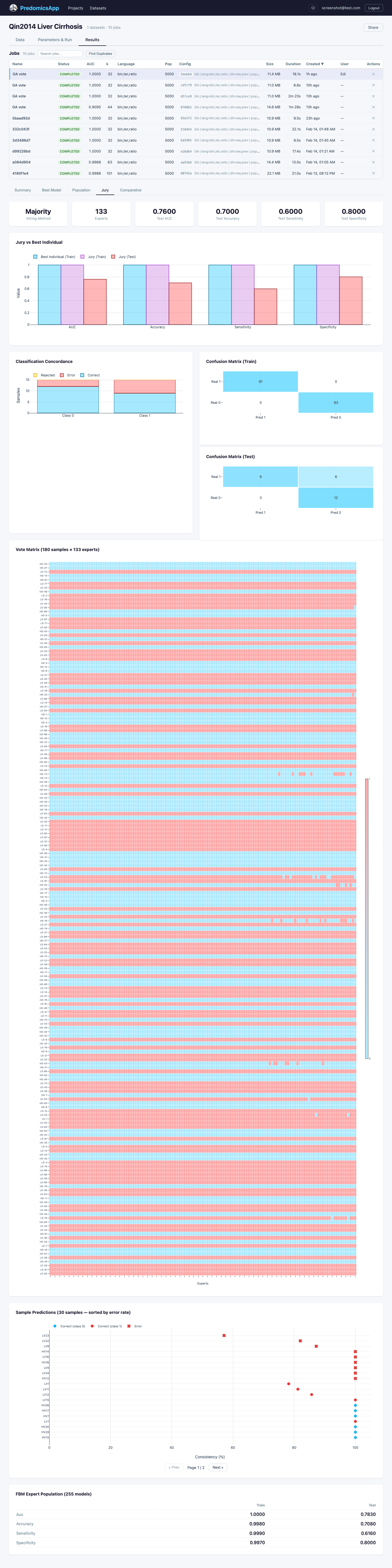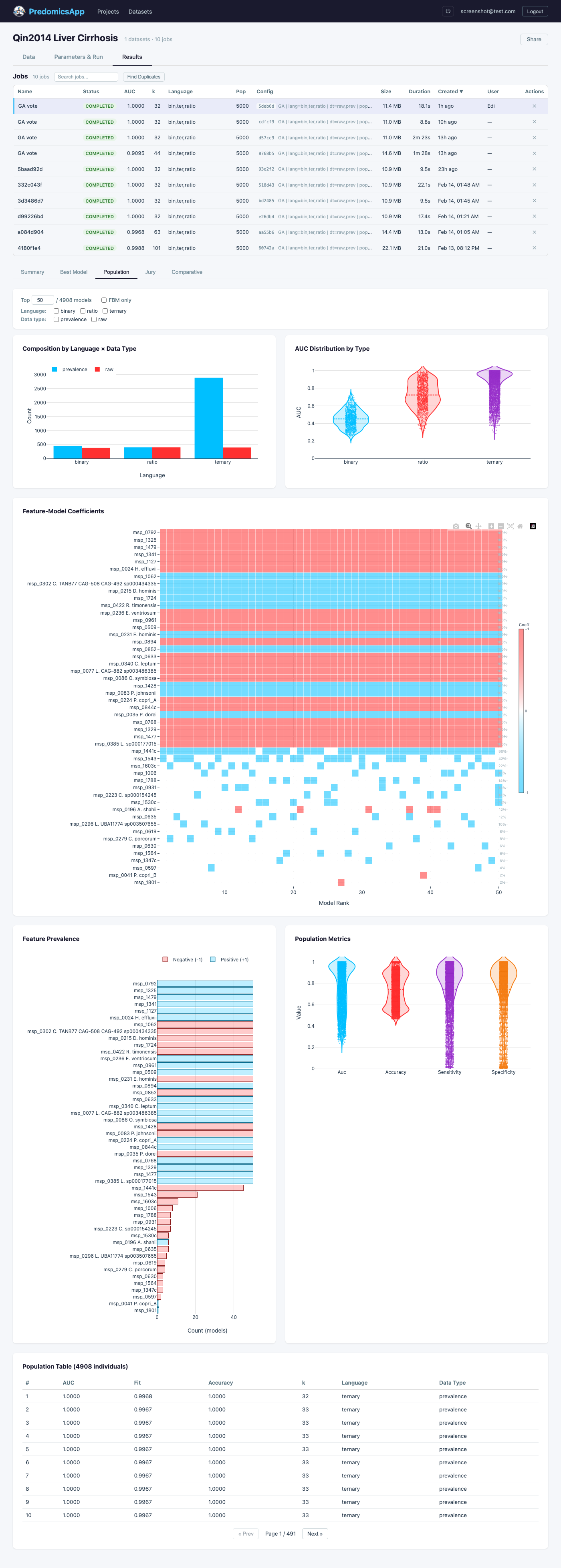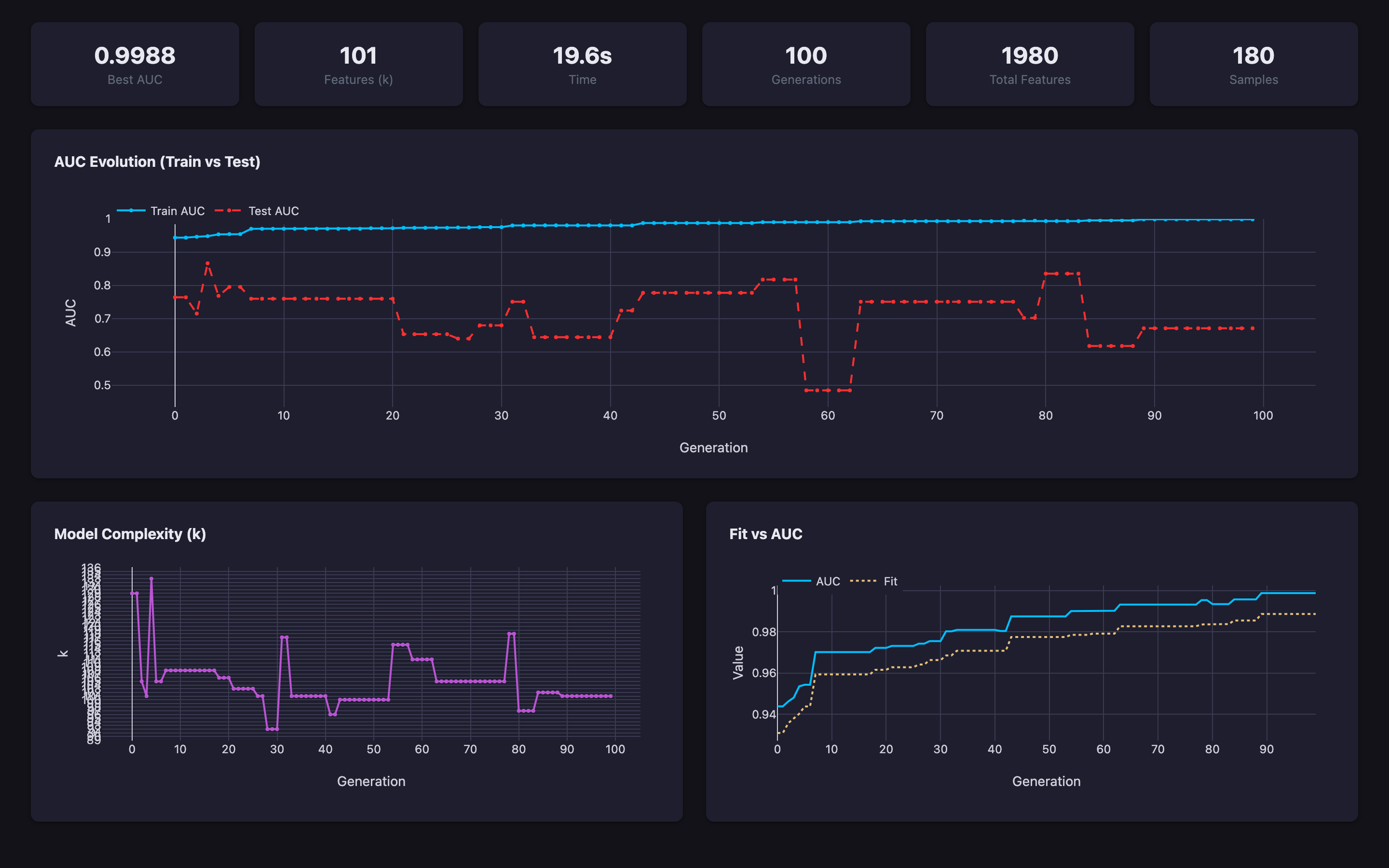
Build interpretable, parsimonious classification models from high-dimensional omics data. Discover minimal-feature signatures using evolutionary algorithms.
From raw omics matrices to publication-ready models in minutes, with full transparency at every step.
Discovers minimal feature sets (binary, ternary, ratio) that achieve high classification accuracy. Models you can actually interpret.
Genetic algorithms and beam search heuristics explore the feature space efficiently to find optimal signatures.
Ensemble of expert models with majority or consensus voting, rejection capability, and per-sample confidence scores.
Prevalence plots, heatmaps, violin plots, AUC evolution, model complexity tracking, and sample predictions.
Built-in k-fold cross-validation with generation-level tracking. Monitor train vs test performance in real time.
Core engine rewritten in Rust, delivering up to 1,000x speedup over the original R implementation. Analyze thousands of features in seconds.
A full-stack interface to upload data, configure experiments, launch analyses, and explore results interactively.
Three complementary tools, one unified approach to interpretable omics classification.
High-performance ML engine rewritten from scratch in Rust — up to 1,000x faster than the original R package. Exposes Python bindings via gpredomicspy for seamless integration with notebooks and scripts.
View Repository →Full-stack web application for running analyses, exploring results, managing projects, and sharing with collaborators. Deploy anywhere with Docker.
View Repository →R bindings for the gpredomics Rust engine. Successor to the original predomicspkg, bringing the 1,000x Rust speedup to the R ecosystem with a familiar interface.
View Repository →Choose your preferred way to use Predomics.